




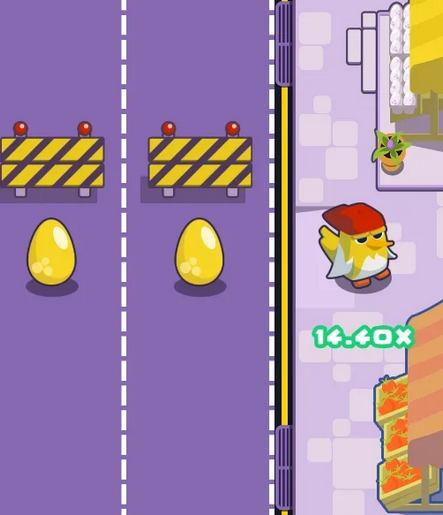
Chicken Cross promo code Game brings a light-hearted farmyard theme to the reels, yet beneath its playful exterior lies a slot with true strategic depth. Players are tasked with assisting a determined chicken traverse a busy country road, with every victorious crossing triggering rewards. The game’s charm rests in its cartoon-style visuals, complete with hay bales, traffic cones, and cheeky hens, but the real attraction is the feature set. Understanding how the mechanics link is the initial step toward extracting maximum value. This article dissects every layer of the experience, from reel architecture to bonus round timing, so that players can approach each session with a solid, informed plan rather than blind luck.
Understanding the Concept and Graphic Design
Chicken Cross Game features a rural roadside backdrop that immediately establishes a playful, easygoing tone. The background shows a winding country lane flanked by wooden fences and sunlit fields, while the reels are decorated by symbols such as traffic lights, corn cobs, fox warning signs, and the chicken protagonist herself. The colour palette leans heavily on warm yellows, grassy greens, and dusty browns, forming a cohesive aesthetic that seems both nostalgic and fresh. Sound effects fulfill a crucial role in supporting the theme, with clucking hens, distant car horns, and cheerful banjo music complementing every spin. This dedication to atmospheric detail is not merely decorative; it aids sustain engagement during longer sessions by lowering visual fatigue and preserving the mood upbeat even when base-game wins are modest.
Beyond surface charm, the visual design serves a practical purpose by ensuring symbol hierarchies immediately recognisable. High-value icons are activated with subtle motion, such as the chicken flapping her wings when part of a winning combination, while low-value card royals are styled as road signs. This separation allows players to judge outcomes at a glance without repeatedly consulting the paytable. The user interface is cleanly laid out, with spin and bet controls positioned intuitively at the bottom of the screen. For UK players habituated to fast-paced gameplay, the absence of clutter results in fewer misclicks and a more seamless overall rhythm. The design philosophy plainly stresses clarity, guaranteeing that even newcomers can swiftly grasp what is happening on the reels.
How the Reels and Paylines Operate
Chicken Cross Game is built on a five-reel, three-row grid that offers a fixed number of paylines, typically twenty. Wins are awarded for matching symbols landing left to right on adjacent reels along any active line, starting from the leftmost reel. The fixed-payline model removes the need to adjust active lines, simplifying decision-making and ensuring that every spin has the same mathematical coverage. This setup appeals to players who like a straightforward approach without sacrificing winning potential. The paytable shows the value of each symbol combination in terms of a multiplier applied to the current bet per line, making it easy to calculate returns for any given stake. Scatter symbols are the exception, as they pay anywhere on the reels regardless of payline position.
The reel strips are weighted to balance the frequency of low-value and high-value symbols, which directly influences the game’s hit rate. Observant players will notice that road-sign royals appear far more often than the chicken or fox warning symbols, generating a steady stream of smaller wins that sustain the bankroll between feature triggers. The wild symbol appears on reels two, three, and four only, which centres its substitution power in the centre of the grid where it can bridge more combinations. Understanding this reel-map restriction is essential for anticipating when a near-miss might turn into a payout. The game does not employ cascading reels or megaways mechanics, preserving the core loop traditional and predictable, which many UK players find reassuring.
RTP and Risk Level Explained
Chicken Cross Game functions with a theoretical return to player (RTP) that sits around the typical range for modern video slots, usually in the 96 percent range. This number reflects the anticipated long-term payback across millions of spins, not a guarantee for any particular session. Players should check the exact RTP within the game’s information panel, as some operators may offer slightly adjusted configurations. The volatility is best described as medium to high, implying wins are less common than in low-variance games but are inclined to be larger when they occur. This profile rewards patience and a sufficiently funded bankroll, because lengthy periods of small or zero returns are a inherent part of the mathematical design.
Grasping volatility is essential for forming realistic expectations. A medium-high variance slot like Chicken Cross Game will often provide the bulk of its payback through bonus features rather than the base game. As a result, players who cash out immediately after a big win may lock in a profit, but those who continue spinning in quest of another feature trigger must acknowledge that the game’s rhythm can alter abruptly. The hit rate—how often any win occurs—typically falls around one in four or one in five spins, but these are often low-multiplier returns that merely reduce the balance decline. The best way to play is to view the base game as the price of admission for the bonus rounds, where the real winning potential resides.
Scatter Signs and Bonus Round Activation
The scatter sign, usually depicted as a pedestrian crossing sign or a stoplight, is the gateway to the game’s most lucrative feature. Getting three or more scatter symbols anywhere on the reels triggers the free spins round, with the amount of free spins scaling according to the scatter total. Three scatter icons might grant ten bonus spins, while four or five can award twelve or fifteen respectively, along with an instant scatter payout. As scatters award regardless of paylines, they deliver a pleasant advantage even before the feature starts. The excitement of scatter hits is a central aspect of the game’s mental engagement, and the sound that accompanies two scatter symbols—often a suspenseful break—is deliberately designed to increase suspense.
During complimentary spins, the game world often transforms visually, with the scene turning into a dark highway or a congested freeway to suggest greater risk and payout. The key strategic insight is that free spins cannot be retriggered in many implementations, meaning the original award is all the user will receive. This makes each bonus spin count, and it highlights the significance of the multiplier mechanic that often goes with the feature. Players should refrain from bypassing the round animations, as seeing how wins build up helps create an gut feeling of the bonus’s reward pattern. The bonus spins feature is where the game’s mathematical generosity is centered, so reaching it without depleting the funds is the key obstacle of effective play.
Betting Range and Bet Management
The stake range in Chicken Cross Game is structured to cater to both cautious players and those pursuing higher thrills. Minimum stakes usually begin around twenty pence per spin, while the maximum can reach one hundred pounds or more, varying by the hosting platform. This wide spectrum means the game suits a variety of session budgets, but it also calls for disciplined stake management. A common strategic approach is to split the total session bankroll into at least one hundred betting units, ensuring that even a prolonged dry spell does not deplete funds before a bonus round can trigger. Because the game’s volatility can generate clusters of dead spins, keeping a bet level that allows for at least eighty to one hundred spins per session is a sensible baseline.
Modifying the bet size also influences how bonus features feel. During free spins, wins are multiplied by the total bet, so a higher stake amplifies the absolute return from any multiplier. However, hunting feature triggers with elevated bets can eat into the bankroll quickly if the scatter symbols refuse to land. Experienced players often employ a stepped approach: beginning with a modest bet during base-game grinding, then increasing the stake slightly after a certain number of non-feature spins, based on a personal loss-limit threshold. The key is to steer clear of emotional escalation. The game’s interface permits quick bet adjustments, but the best way to play is to determine a firm upper limit before the session begins and follow it, regarding any increase as a calculated risk rather than a recovery attempt.
Wilds and How They Work
The wild symbol in Chicken Cross Game is represented by a golden egg or a comparable icon, and its key role is to stand in for all regular paying symbols to create winning combinations. It does not substitute for the scatter, which is used for triggering free spins. The wild appears exclusively on the three middle reels, a careful design choice that prevents it from forming its own payline-filling combinations on the outer reels but maximises its connective power. When a wild stops on reel three, for example, it can connect two high-value symbols on reels two and four, practically turning a near-miss into a significant payout. This limited placement means players should watch reel two and four when a wild is present, as those columns often influence the spin’s outcome.
In some versions of the game, wilds carry additional properties during bonus rounds. They may become sticky, remaining in place for the duration of free spins, or they might expand to cover entire reels. These improvements dramatically affect the round’s potential, so it is worth checking the specific rules of the variant being played. Even in the base game, a well-timed wild can rescue an otherwise unrewarding sequence of spins. Because wilds do not have their own payout value, their worth is wholly contextual, relying on the symbols surrounding them. Players who keep their session statistics will often observe that the most memorable base-game wins happen when a wild lands exactly at the intersection of multiple active paylines, increasing its substitution effect across several combinations simultaneously.
Multiplier Systems and Bonus Games
Multipliers in Chicken Cross Game are most notably active during the free spins feature, where a increasing or fixed multiplier can enhance every win. A common configuration begins the multiplier at one times and amplifies by one after each winning spin, up to a cap of five or ten times. This escalating structure means that later free spins carry considerably more weight than early ones, and a sequence of consecutive wins can produce a chain effect that transforms a modest bonus into a session-defining payout. In some variants, the multiplier is linked to wild symbols, so any win involving a wild is doubled or tripled. Knowing which multiplier type is in play is essential, as it governs whether the player should hope for wild-heavy spins or consecutive-win streaks.
Beyond free spins, a separate bonus round may be initiated by specific symbol combinations or randomly after any base-game spin. This could take the form of a pick-and-click game where the chicken endeavors to cross ever more busy roads, with each successful crossing granting a cash prize or an additional multiplier. The interactive nature of such rounds adds a skill-adjacent element, though the outcomes remain determined by random number generation. The best approach is to regard these bonus rounds as enjoyable interludes that can occasionally deliver substantial rewards, rather than reliable income sources. Understanding the maximum multiplier cap and the rules governing its reset helps players evaluate the true ceiling of any given feature and steer clear of unrealistic expectations during play.
Boosting the Max Win Possibility
The top win in Chicken Cross Game is commonly capped at a multiplier of the total stake, often in the range of five thousand to ten thousand times the bet. This ceiling is not a abstract idea; it is applied by the game’s mechanics and will halt any bonus round that hits it. To truly get near this upper limit, players require a blend of high multipliers, multiple wilds, and a full screen of top-paying symbols during free spins. Such an event is highly rare, but the game’s design channels thrill toward these moments. The finest way to play with the max win in mind is not to hunt it foolishly, but to organise sessions so that when variance jumps, the player is set to profit without having already depleted their bankroll.
One useful tactic is to define a session win goal that is a fraction of the highest, perhaps 100x the stake, and to walk away when it is attained. This recognises that while the max win is in theory possible, the likelihood of hitting it in any single session is extremely small. Players should also be cognisant that wagering higher amounts does not increase the likelihood of activating the max win; it only scales the payout if it happens. Therefore, the ideal strategy equilibrates bet size against the number of spins one can cover, emphasising longevity over the slim chance of an immediate jackpot. Reviewing the game’s rules for any jackpot addition or progressive feature is also advisable, as some variants may seed a separate prize pool that changes the risk-reward equation.
Comprehensive Guide to Mastering Chicken Cross Game
Beginning a session on Chicken Cross Game necessitates a structured approach that extends past simply hitting the spin button. The first step is to view the game’s information panel and study the paytable, noting the value of each symbol, the wild’s reel restrictions, and the exact number of free spins awarded per scatter count. Next, the player should configure the bet level using the on-screen controls, making sure it aligns with a pre-determined session budget. Activating the autoplay function with a loss limit is a wise move for those who choose a steady pace, but manual spinning gives greater control and a more involved experience. Before the first spin, it is also recommended confirming whether any bonus buy option is available, though this feature may be limited for UK players under current regulations.
Once the game is in motion, the player’s focus should shift to watching scatter accumulation and wild placements. Maintaining a mental tally of how many spins have passed without a feature can influence decisions about carrying on or modifying the stake, though it is essential to remember that each spin is independent. When the free spins round starts, the player should note the multiplier progression and check whether retriggers are possible. After the feature finishes, a disciplined review of the session balance against the initial bankroll dictates whether to continue or stop. The most effective players handle each session as a closed loop, with clear entry and exit criteria, rather than an open-ended gamble. This structured approach transforms Chicken Cross Game from a simple distraction into a game of informed decision-making.
Chicken Cross Game compensates those who see beyond its whimsical exterior and engage with its underlying mechanics. The road may be busy and the traffic erratic, but a player armed with knowledge of payline structures, volatility rhythms, and bonus round thresholds navigates it with far greater confidence. The best way to play is not to depend on luck alone, but to treat every spin as part of a larger, mathematically grounded strategy that respects both the game’s design and the player’s own limits.